
Perfection in the Process
We’re constantly working with our manufacturer to improve the ODOGard application process. This helps us create a product that keeps up with the toughest environments. Below is a history of our path to purification perfection.
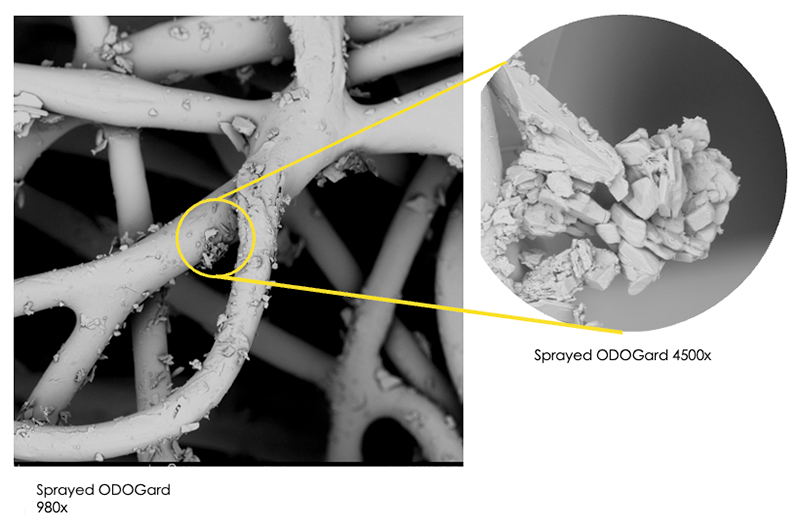
Phase I: Spraying
Our early manufacturing process utilized a spray on application. The sprayed droplets were much larger, leaving an undesirable and inefficient coating of ODOGard on the filter material.
Phase II: Embedding
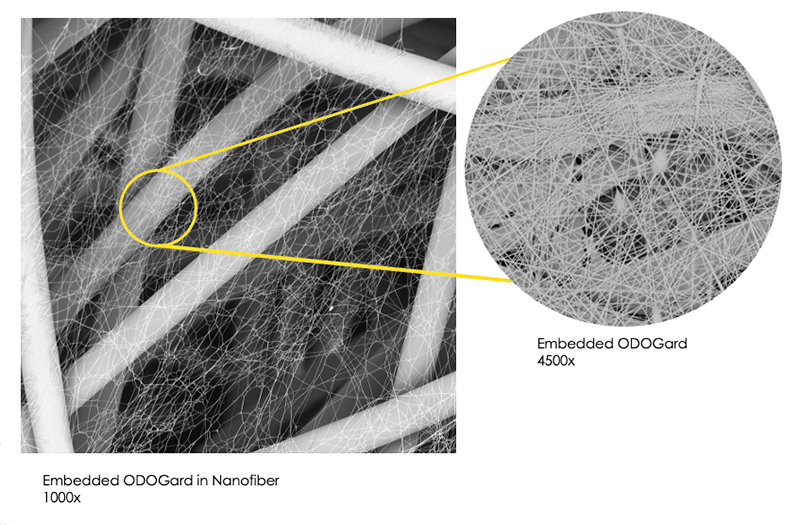
Our next ODOGard implementation process utilized embedding. This process allows ODOGard to make up roughly 50% of the nanofiber polymer’s weight but it also becomes a less noticeable application, with ODOGard’s presence only being shown by a chemical reaction or titration.
Phase III: Annealing
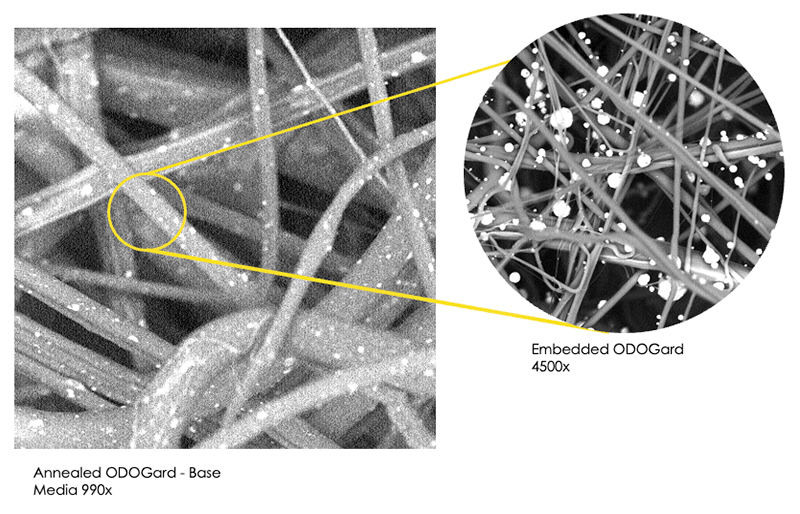
Our most recent development has been the process of annealing the ODOGard on to Base Non-Woven Media. This process has proven to be one of the most efficient applications so far, with a reduction in wasted materials and increase in ODOGard longevity.
Phase I: Spraying
Our early manufacturing process utilized a spray on application. The sprayed droplets were much larger, leaving an undesirable and inefficient coating of ODOGard on the filter material.
Phase II: Embedding
Our next ODOGard implementation process utilized embedding. This process allows ODOGard to make up roughly 50% of the nanofiber polymer’s weight but it also becomes a less noticeable application, with ODOGard’s presence only being shown by a chemical reaction or titration.
Phase III: Annealing
Our most recent development has been the process of annealing the ODOGard on to Base Non-Woven Media. This process has proven to be one of the most efficient applications so far, with a reduction in wasted materials and increase in ODOGard longevity.